June 6, 2026
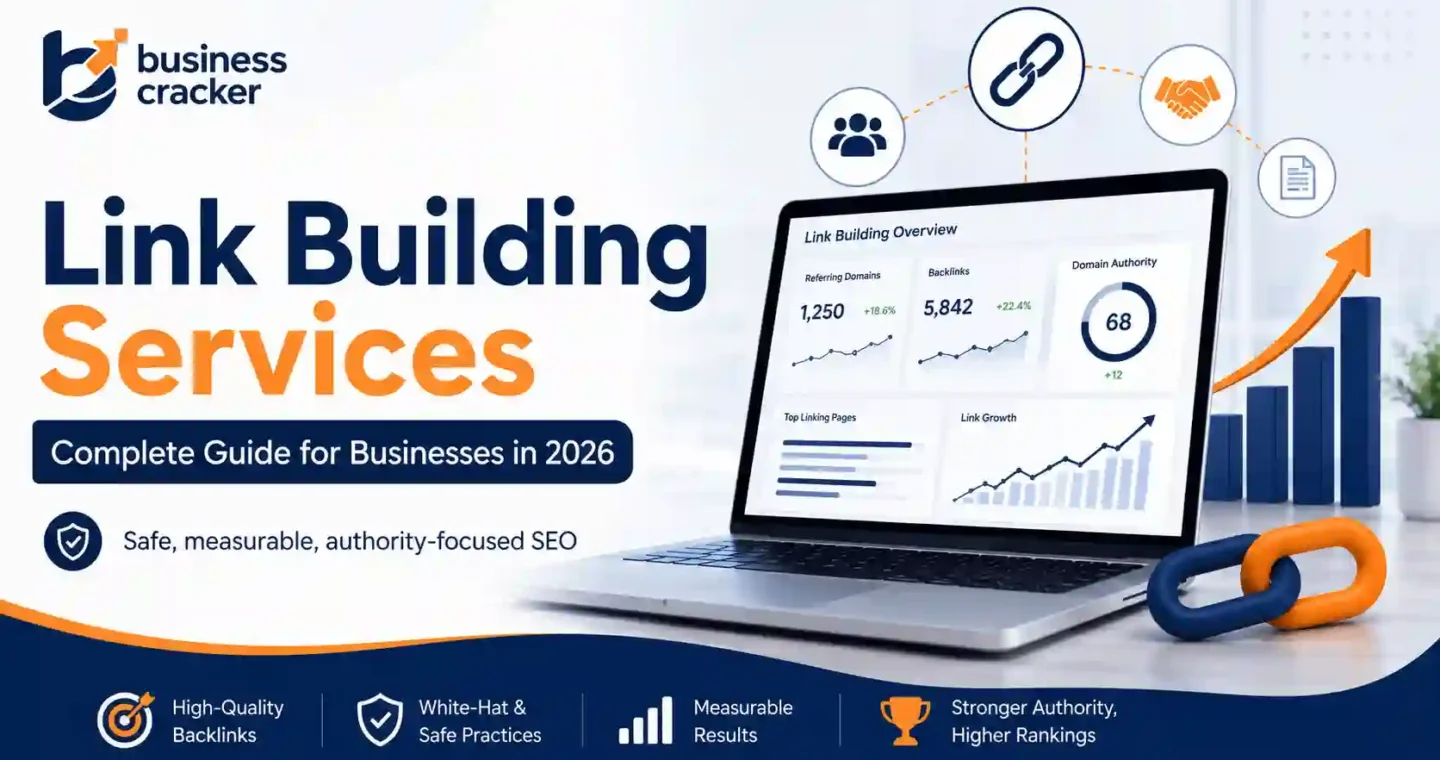
Link Building Services: Complete Guide for Businesses in 2026
Businesses usually understand one part of link building: backlinks can help SEO. The confusion starts after that.
What makes a backlink safe? What should a link building agency actually do? How many links are enough? Should a business pay for placements? Why do some links move rankings while others do nothing? And why do so many SEO link building services promise authority but deliver links from weak sites with no traffic, no editorial standards, and no business relevance?
That is the problem this guide solves.
In 2026, link building is not about collecting random backlinks. It is about earning or securing relevant mentions from websites that make sense for your industry, content, audience, and search goals. Poor link building can waste budget. Aggressive link building can create risk. Good link building supports SEO through relevance, authority, trust, and measurable outcomes.
For businesses that need structured support, seo link building services should be evaluated like any other business investment: what is the process, what is the risk, what is being measured, and how does it support organic growth?
The Problem This Article Solves
Business owners, founders, and marketing managers often know they need backlinks, but they do not know what a safe, measurable link building service should include.
That confusion is visible in SEO communities. One Reddit user managing SEO for a B2B company asked how link building is actually done in practice, not in theory, and questioned whether the industry had simply moved from cheap spam links to expensive paid placements on better-looking websites. Another discussion from a local SEO community asked which link building services actually move rankings and which ones are just noise, with users debating manual outreach, white label vendors, and link quality checks.
Those questions reflect the real buying problem. Businesses are not only asking, “Do we need backlinks?” They are asking, “How do we avoid wasting money or creating SEO risk?”
Desired Reader Outcome
After reading this guide, you should be able to:
- Understand what link building services should include
- Separate safe SEO link building from risky backlink tactics
- Know what to ask before hiring a link building company
- Understand how custom link building should connect with SEO goals
- Measure link quality beyond DA, DR, and link count
- Decide whether your business needs an agency, in-house outreach, or a blended approach
Why Link Building Still Matters in 2026
Links still matter because they help search engines discover pages, understand relationships between websites, and evaluate signals of authority. Google’s SEO Starter Guide says Google primarily finds pages through links from other pages it has already crawled, and that links help users and search engines connect to relevant resources. It also says PageRank uses links, although Google Search uses many ranking signals, and links are not the only factor.
That last point matters. Links are important, but they do not fix everything.
A website with weak content, poor search intent alignment, slow pages, thin service pages, or technical SEO issues will not become strong just because it gets backlinks. Link building works best when it supports a proper SEO strategy that already covers technical SEO, on-page optimization, content quality, internal linking, and search intent.
Ahrefs’ 2026 SEO statistics page reports that 96.55 percent of pages get zero organic search traffic from Google. Its related search traffic study says pages are more likely to be in the small group that gets traffic when they target topics with traffic potential, match search intent, and earn backlinks.
The practical point is simple. Backlinks alone are not the strategy. They are one part of the strategy.
What Are Link Building Services?
Link building services are professional SEO services focused on helping a website earn, acquire, or secure relevant backlinks from external websites.
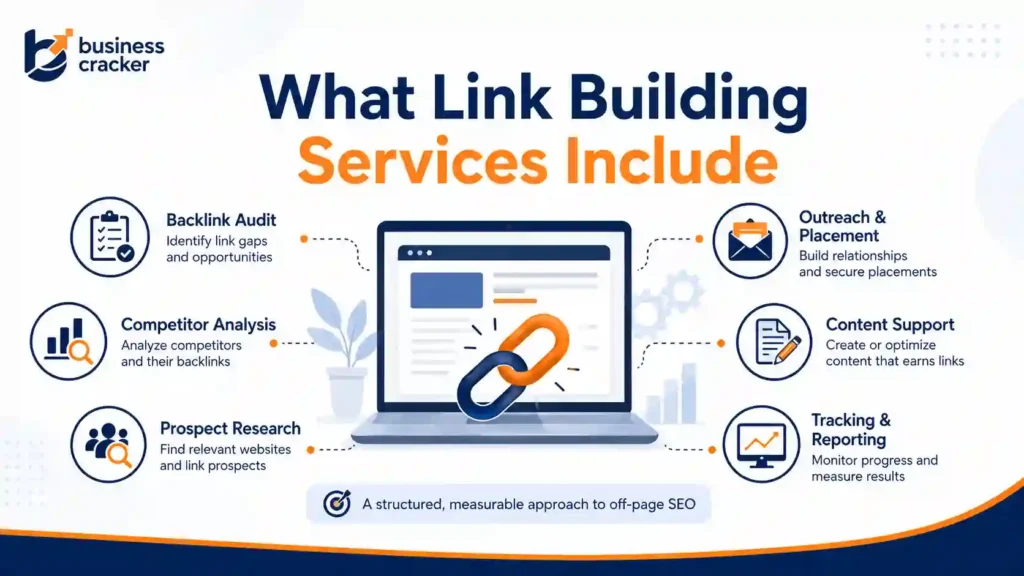
A proper link building service may include:
- Backlink profile audit
- Competitor backlink analysis
- Link gap research
- Prospect research
- Outreach strategy
- Guest post outreach
- Digital PR support
- Niche edit opportunities
- Broken link building outreach
- Resource page outreach
- Unlinked brand mention outreach
- Local citation and partnership opportunities
- Anchor text planning
- Link tracking
- Placement quality review
- Reporting and performance analysis
Business Cracker’s link building services page also frames link building around relevance, quality, outreach, guest posting, niche edits, digital PR support, tracking, and reporting, which is the right direction for businesses that want sustainable authority building instead of shortcut tactics.
What Link Building Services Should Not Be
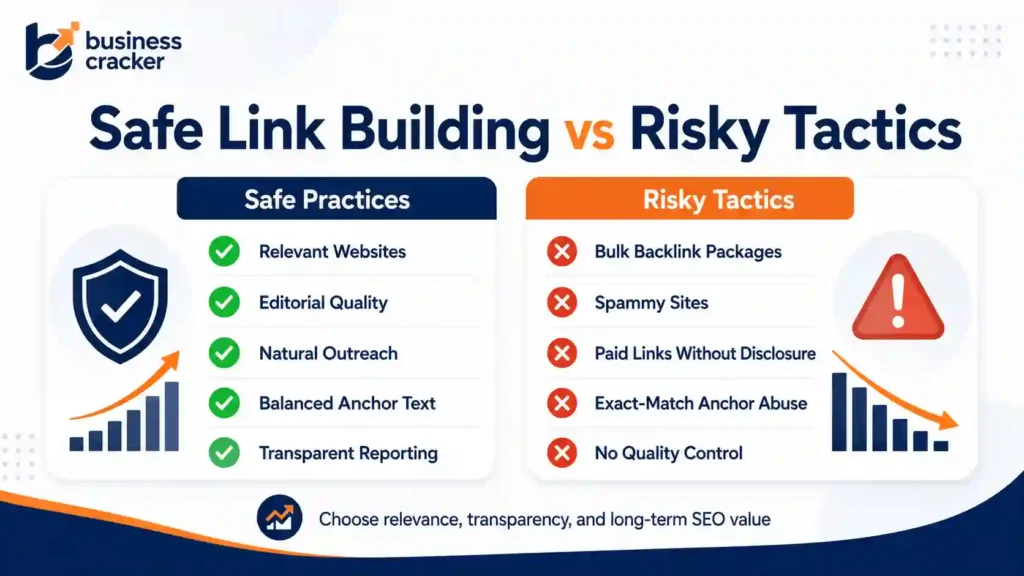
A link building service should not be a bulk backlink package.
Avoid services that sell:
- 100 backlinks in 7 days
- Guaranteed DA 90 links
- Guaranteed ranking improvement from links alone
- Automated profile backlinks
- Comment spam links
- Forum signature links
- Private blog network links
- Low-quality directory blasts
- Exact-match anchor text packages
- Links from unrelated sites
- Links from websites with no real audience
- Links from AI-generated content farms
- Links with no placement transparency
Google’s spam policies define link spam as links created primarily to manipulate search rankings. Google lists buying or selling links for ranking purposes, excessive link exchanges, automated link creation, low-quality directory links, optimized links in guest posts or press releases, and forum comments with optimized links as examples of link spam. Google also notes that paid advertising or sponsorship links are not policy violations when they are properly qualified with attributes such as rel=”nofollow” or rel=”sponsored”.
That does not mean every link building effort is unsafe. It means businesses need to know the difference between business promotion, editorial visibility, digital PR, and manipulative link schemes.
Why Businesses Buy Link Building Services
Most businesses buy link building services for one of five reasons.
1. Competitors Have Stronger Authority
In competitive SERPs, a business may have good service pages and decent content, but still struggle because competitors have stronger backlink profiles.
A link gap audit can show:
- Which competitors have more referring domains
- Which pages attract links
- Which publishers link to competitors
- Which topics earn links in the niche
- Which link types are missing from your site
- Which pages need authority support
This helps link building become more targeted.
2. Content Is Published but Not Ranking
Many businesses publish blogs, service pages, and landing pages, but see no organic growth. Sometimes the issue is content quality. Sometimes it is technical SEO. Sometimes it is a search intent mismatch. Sometimes the page needs more authority.
A good link building agency should not blindly build links to every page. It should first identify which pages are worth supporting.
Strong target pages usually have:
- Clear search intent match
- Useful content
- Good internal links
- Strong on-page structure
- Commercial or strategic value
- Real ranking potential
- Clear conversion path
Building links to weak pages is inefficient.
3. The Business Needs More Trust in a Competitive Market
Links from relevant websites can support brand visibility and trust. A mention from a respected industry site, local publication, association, partner page, or niche blog can help the business look more credible.
This is especially useful for:
- B2B service companies
- SaaS companies
- Local service businesses
- Healthcare and wellness businesses
- Legal and finance-related businesses
- Education companies
- E-commerce brands
- Agencies and consultants
- Startups entering a competitive market
Good link building should support both ranking potential and brand credibility.
4. The Internal Team Does Not Have Outreach Capacity
Manual link building takes time.
It requires prospecting, qualification, personalization, follow-ups, content coordination, negotiation, placement review, link tracking, and reporting. Many businesses do not have the time or team structure to handle this consistently.
This is where a link building company can help, but only if the process is transparent.
5. The Business Needs a Repeatable System
One-off link wins are useful, but SEO growth usually needs consistency.
A proper custom link building plan should define:
- Target pages
- Link types
- Prospect criteria
- Outreach angles
- Monthly link targets
- Anchor text rules
- Quality standards
- Reporting format
- Risk controls
- Review cadence
Without this structure, link building becomes random.
The Real Risk: Paying for Links Without Understanding Quality
The link building market is messy because many businesses buy links using weak quality signals.
Common bad buying criteria include:
- High DA only
- High DR only
- Cheap link price
- Fast delivery
- Guaranteed dofollow
- Publisher list without traffic review
- No relevance check
- No content review
- No outbound link review
- No transparency about the placement method
Metrics such as DA, DR, traffic, and spam score can help with filtering, but they are not enough. A website can have decent authority metrics and still be poor for your business if it has irrelevant content, no real audience, obvious paid link patterns, or low editorial standards.
A safe link building service should inspect the page and the domain manually.
What Makes a Backlink Valuable?
A useful backlink is not defined by one metric. It is a combination of relevance, authority, placement quality, editorial context, anchor text, traffic potential, and risk profile.
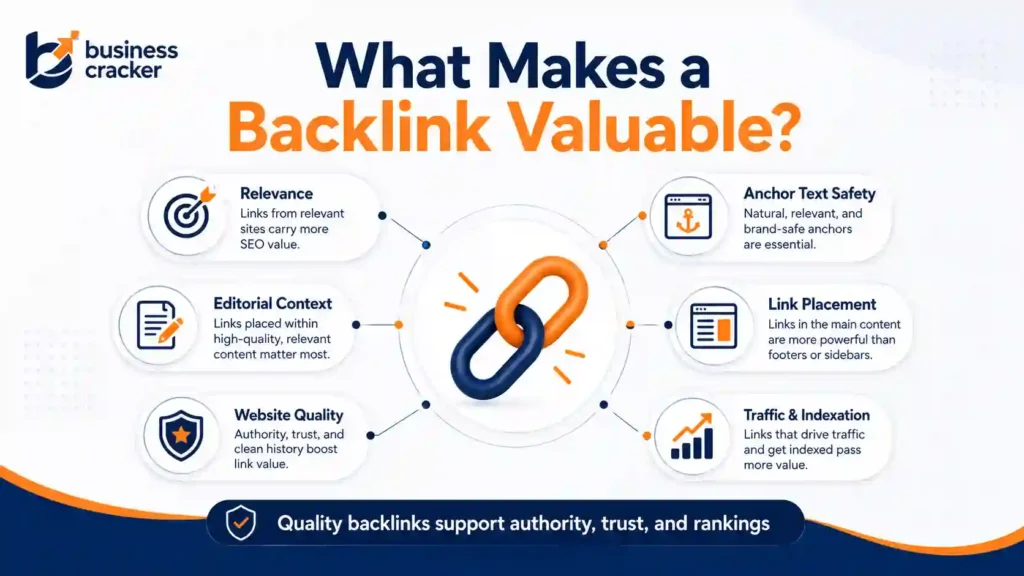
1. Relevance
Relevance is the first filter.
A backlink from a website in your industry, niche, city, customer ecosystem, or topic cluster is usually more useful than a random link from an unrelated high-metric domain.
Example:
A B2B software company may benefit from links from SaaS blogs, startup publications, integration partners, industry reports, software comparison pages, and founder interviews.
A local dentist may benefit from local directories, community sponsorship pages, chamber of commerce listings, local news mentions, healthcare content, and partner businesses.
2. Editorial Context
The link should sit in content that makes sense.
A good link appears naturally in a relevant paragraph, article, resource page, case study, guide, or business mention. A weak link appears in a thin article written only to hold backlinks.
Review:
- Is the article useful?
- Does the link help the reader?
- Is the topic relevant?
- Is the surrounding content natural?
- Does the article link to too many unrelated sites?
- Is the page indexed?
- Does the page look editorial or transactional?
3. Website Quality
Before accepting a link, check the website.
Review:
- Organic traffic trend
- Top ranking pages
- Top ranking keywords
- Content quality
- Publishing pattern
- Outbound link pattern
- Niche relevance
- Indexed pages
- Design and user experience
- Contact and editorial details
- Author information
- Spam or casino-style outbound links
- Sudden traffic drops
A site that publishes unrelated paid posts every day is rarely a strong choice.
4. Anchor Text Safety
Anchor text matters, but over-optimization is risky.
A natural anchor text mix may include:
- Brand name
- URL anchors
- Partial match anchors
- Page title anchors
- Generic anchors
- Long phrase anchors
- Contextual descriptive anchors
Avoid forcing exact-match commercial anchors repeatedly. If every link says “best SEO link building services,” the pattern can look unnatural.
5. Link Placement
Placement affects quality.
Better placements:
- Editorial body content
- Relevant resource pages
- Partner pages
- Case study mentions
- Industry list mentions
- Local sponsorship pages
- Research citations
- Podcast or interview pages
Weak placements:
- Footer links across many pages
- Sidebar sitewide links
- Comment sections
- Profile spam
- Low-quality directories
- Auto-generated pages
- Link farm pages
6. Traffic and Indexation
A link from a page that is never indexed and never seen by users may have limited value.
Check whether:
- The page is indexed
- The domain gets relevant traffic
- The article has a chance to rank
- The site has real users
- The placement is not hidden
- The page is internally linked
A link should not exist only inside a spreadsheet.
Safe Link Building Services: What Should Be Included
A proper link building service should include the following.
1. Backlink Profile Audit
Before building anything, the agency should review the current backlink profile.
The audit should check:
- Referring domains
- Link growth trend
- Toxic or suspicious links
- Anchor text distribution
- Links to commercial pages
- Links to blog pages
- Lost links
- Competitor comparison
- Link quality by topic
- Over-optimized anchors
- Country and language relevance
This helps identify what the business actually needs.
2. Competitor Link Gap Analysis
A good link building agency should study competitors, but not copy them blindly.
A competitor link gap analysis should identify:
- Which domains link to competitors but not to you
- Which link types are common in the industry
- Which pages attract the most links
- Which publishers are realistic outreach targets
- Which competitor links are low quality and should be ignored
- Which link sources may support local or niche relevance
The goal is to identify useful patterns, not duplicate every competitor’s backlink.
3. Target Page Selection
Not every page deserves link building.
A good agency should help choose target pages based on business value and SEO potential.
Common target pages include:
- Service pages
- Category pages
- Product pages
- Comparison pages
- Research pages
- Linkable blog assets
- Tools or calculators
- Location pages
- Case studies
- Guides
For example, a business investing in SEO services may need links to service pages and supporting educational content. A company focused on authority building may prioritize link building services and broader content assets.
4. Prospect Research
Prospect research should go beyond scraping websites from a tool.
A qualified prospect should be checked for:
- Topic relevance
- Real traffic
- Editorial quality
- Audience fit
- Indexation
- Outbound link quality
- Publisher credibility
- Link placement history
- Contact details
- Potential relationship value
This is where custom link building becomes important. A legal business, SaaS company, ecommerce store, local contractor, and healthcare clinic should not receive the same prospect list.
5. Outreach Strategy
Good outreach is specific.
Weak outreach says:
“Hi, I found your site and want to contribute a guest post.”
Better outreach explains:
- Why the website is relevant
- What topic would fit the audience
- What content gap exists
- What value can the business provide
- Why the proposed source is useful
- Why the link makes sense
Outreach should feel like a real editorial pitch, not a mass email.
6. Content Support
Many link placements require content. The quality of that content matters.
Good guest post or contributed content should be:
- Original
- Useful
- Relevant to the publisher’s audience
- Written for humans
- Fact checked
- Non-promotional
- Naturally linked
- Free from keyword stuffing
- Aligned with editorial standards
Thin guest posts built only for backlinks are weak assets.
7. Link Placement Review
Before approving a placement, review:
- Domain relevance
- Page topic
- Link context
- Anchor text
- Indexation
- Outbound links
- Article quality
- Sponsored or nofollow attributes where applicable
- Placement visibility
- Whether the link is permanent or temporary
Do not approve links only because the domain metric looks good.
8. Reporting
A measurable link building service should provide clear reporting.
The report should include:
- Live URL
- Target URL
- Anchor text
- Domain metric
- Estimated traffic
- Relevance notes
- Link type
- Follow or nofollow status
- Placement date
- Indexation check
- Status of outreach pipeline
- Notes on lost or changed links
For business owners, the report should also connect links to SEO performance, not only list placements.
9. Performance Review
Link building should be reviewed against outcomes.
Track:
- Ranking movement
- Organic traffic to target pages
- Referring domain growth
- Keyword visibility
- Assisted conversions
- Lead quality
- Branded searches
- Link retention
- Competitor movement
- Anchor text safety
- Page-level performance
Google’s SEO Starter Guide also cautions that SEO changes may take time, with some changes taking weeks or months to show impact. This is important for link building expectations because authority signals and rankings usually build gradually rather than instantly.
Common Types of Link Building Services
1. Guest Posting
Guest posting involves contributing content to another website with a relevant backlink.
It can work when:
- The publisher is relevant
- The content is useful
- The article is editorially reviewed
- The link is natural
- The site has real readers
- The content is not part of a link farm
It becomes risky when guest posts are mass-produced only for keyword-rich links.
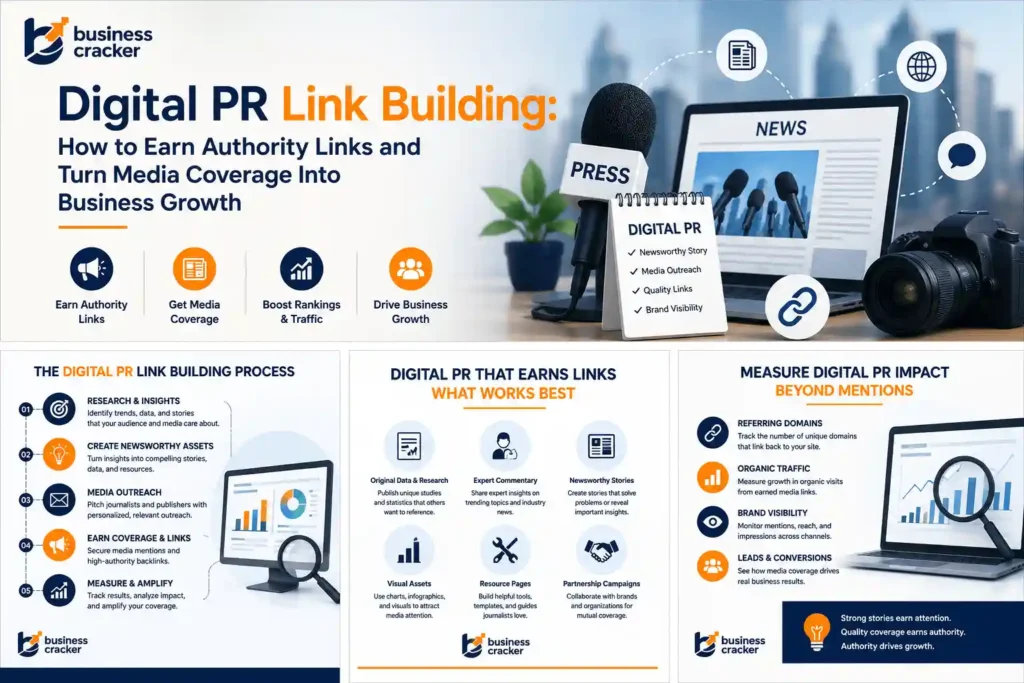
2. Digital PR
Digital PR focuses on earning links through newsworthy content, expert commentary, data, campaigns, research, or stories.
Examples include:
- Original industry data
- Surveys
- Expert quotes
- Founder commentary
- Newsworthy business stories
- Local PR
- Product launches with real relevance
- Reports and studies
- Journalist outreach
Digital PR is often stronger for brand credibility than simple guest posting, but it takes more planning.
3. Niche Edits
Niche edits involve adding a link to an existing article on a relevant website.
They can be useful when the article is relevant, indexed, and editorially appropriate. They can be risky when links are inserted into unrelated content or sold at scale with no editorial value.
Check the page carefully before accepting a niche edit.
4. Broken Link Building
Broken link building involves finding broken external links on relevant websites and suggesting your content as a replacement.
This can work well when your content is genuinely useful and matches the broken resource.
It requires:
- Finding broken links
- Matching content intent
- Creating or improving replacement content
- Contacting site owners
- Following up professionally
5. Resource Page Outreach
Some websites maintain resource pages for tools, guides, associations, vendors, or industry education.
This works when your page is genuinely useful.
Examples:
- Free tools
- Calculators
- Checklists
- Research reports
- Educational guides
- Industry directories
- Local resources
6. Unlinked Brand Mentions
If websites mention your brand without linking to it, outreach can request a link.
This is often one of the cleaner link building tactics because the publisher already knows the brand.
7. Local Link Building
Local businesses can build links through:
- Chamber of commerce pages
- Local associations
- Local sponsorships
- Local news
- Community events
- Supplier pages
- Partner businesses
- Local directories
- Local podcasts
- Local charities
- Industry-specific local listings
For local SEO, relevance and geography matter more than chasing large national domains.
8. Partner and Vendor Links
Businesses often have real relationships that can support natural links.
Check:
- Suppliers
- Software partners
- Certification providers
- Associations
- Event partners
- Sponsorships
- Distributors
- Integration partners
- Franchise networks
- Professional memberships
These links are often underused because no one asks for them.
What a Link Building Agency Should Ask Before Starting
A good link building agency should not start by selling packages. It should ask questions.
Important questions include:
- What are your main business goals?
- Which services or products are highest priority?
- Which locations or markets matter?
- Which pages need stronger visibility?
- What is your current backlink profile?
- Have you bought links before?
- Do you have past manual actions or traffic drops?
- Who are your search competitors?
- What content assets already exist?
- What internal resources can support outreach?
- Are there existing partnerships we can use?
- What level of risk are you willing to accept?
- What metrics matter most to the business?
If an agency does not ask these questions, it may be selling links instead of building a strategy.
How to Choose a Link Building Company
Use this checklist before hiring a provider.
1. Ask About the Process
A serious provider should explain:
- How they find prospects
- How they qualify sites
- How they handle outreach
- How they select anchors
- How they review placements
- How they report links
- How they manage risk
- How they measure impact
Avoid providers that hide the process completely.
2. Ask for Sample Reports
A sample report should show more than URLs.
It should include relevance, traffic, anchor text, target page, link type, and quality notes.
3. Ask How They Handle Paid Placements
This is important.
Google allows paid advertising and sponsorship links when they are properly qualified with rel=”nofollow” or rel=”sponsored”, but buying or selling links that pass ranking credit is listed under link spam when the purpose is ranking manipulation. (Google for Developers)
A responsible agency should be clear about how it handles sponsored placements, editorial links, disclosure, and risk.
4. Ask About Anchor Text Rules
Avoid agencies that push exact-match anchors aggressively.
Safe anchor planning should include brand, URL, partial match, and natural anchors.
5. Ask Whether They Guarantee Rankings
No link building company can honestly guarantee rankings from backlinks alone.
Rankings depend on:
- Search intent
- Content quality
- Technical SEO
- Competitor strength
- Internal linking
- Website authority
- User behavior
- SERP changes
- Algorithm updates
- Brand strength
Guarantees are usually a red flag.
6. Ask How They Select Target Pages
If every link points to the homepage or one commercial page, the strategy may be weak.
A balanced plan may support service pages, category pages, blog assets, research pages, and other pages based on business goals.
7. Ask About Link Retention
Some links disappear after a few months.
Ask:
- Are placements monitored?
- What happens if a link is removed?
- Is replacement included?
- How often are live links checked?
- Are publishers vetted for permanence?
8. Ask About Relevance
A link from a high-metric unrelated website is not automatically useful.
Ask how the agency defines relevance at the domain, page, topic, and audience level.
Red Flags in SEO Link Building Services
Be careful if a provider offers:
- Very cheap bulk backlinks
- Guaranteed first-page rankings
- Guaranteed dofollow links on every placement
- No prospect review
- No sample reports
- No explanation of methods
- No content quality review
- No anchor text strategy
- No target page strategy
- No mention of Google policies
- No relevance filters
- No traffic checks
- No reporting beyond link count
- No willingness to discuss risk
Also, be careful with vague words such as “premium,” “high authority,” or “white hat” if the provider cannot explain the process behind them.
What Safe Link Building Looks Like in Practice
A safe, measurable link building service usually follows this flow.
Step 1: Audit
Review the current backlink profile, traffic, ranking pages, target pages, and competitors.
Step 2: Strategy
Define target pages, link types, quality standards, and monthly priorities.
Step 3: Prospecting
Build a list of relevant publishers, directories, partners, journalists, and resource pages.
Step 4: Qualification
Check relevance, traffic, content quality, outbound links, indexation, and risk.
Step 5: Outreach
Send personalized pitches based on real audience fit.
Step 6: Content
Create or support content that is useful for the publisher and reader.
Step 7: Placement Review
Review the final page, anchor, link status, and context.
Step 8: Reporting
Track live links, target pages, anchors, placement type, and quality notes.
Step 9: Performance Review
Measure rankings, traffic, referring domains, lead quality, and link retention over time.
This is the difference between buying links and building an authority system.
How Link Building Connects With SEO
Link building should not sit outside SEO.
It should connect with:
- Technical SEO
- Keyword strategy
- Search intent
- Content planning
- Internal linking
- Landing page quality
- Conversion path
- Local SEO
- Digital PR
- Brand visibility
- Analytics and reporting
Business Cracker’s digital marketing services connect SEO, link building, SMO, paid campaigns, web design, and ORM because growth usually depends on multiple signals working together.
A backlink may help a page gain authority. But the page still needs to answer the query, load properly, satisfy users, and support the next business action.
How Many Links Does a Business Need?
There is no universal number.
The right number depends on:
- Current domain authority
- Competitor backlink profiles
- Keyword difficulty
- Target location
- Industry competition
- Page type
- Existing content quality
- Internal linking strength
- Brand authority
- Link quality
- Timeline
A local service business may need a smaller number of highly relevant local and industry links. A national SaaS brand competing for high-intent keywords may need a larger authority-building program.
Do not ask only, “How many links will we get?” Ask, “Which pages need links, from what type of websites, and why?”
What Should Be Measured?
A link building report should not stop at “links delivered.”
Measure:
- Number of qualified referring domains
- Relevance of linking domains
- Organic traffic trend
- Keyword movement for target pages
- Page-level impressions and clicks
- Anchor text distribution
- Link retention
- New versus lost links
- Competitor link velocity
- Assisted conversions
- Leads from organic search
- Branded search growth
- Risk signals
A link that improves the backlink count but has no relevance, no indexation, no traffic, and no editorial value should not be celebrated.
Link Building and AI Search in 2026
Search is changing. AI Overviews, AI assistants, and answer engines have made brand mentions, citations, and trusted sources more important.
This does not make backlinks irrelevant. It makes quality and authority signals more visible.
If your brand is mentioned across trusted industry sources, comparison pages, expert roundups, reports, and credible publications, that visibility can support both traditional SEO and broader discovery.
The 2026 approach should focus on:
- Real expertise
- Original data
- Strong digital PR
- Mentions from relevant websites
- Useful resources
- Clear entity signals
- Consistent brand references
- Quality content that earns citations
Low-quality link schemes are not a future-proof strategy.
Custom Link Building: Why Fixed Packages Often Fail
Fixed packages are easy to sell, but they rarely fit every business.
A custom link building plan should consider:
- Business model
- Website age
- Current backlink profile
- Target market
- Search competition
- Budget
- Content assets
- Risk tolerance
- Sales cycle
- Local versus national reach
- Existing partnerships
- Internal team capacity
Example:
A startup with no authority may need foundational links, founder PR, startup directories, partner mentions, and helpful content assets.
A local business may need citations, local partnerships, local PR, industry directories, and service page support.
An ecommerce brand may need product PR, gift guides, category page support, review content, and publisher outreach.
A B2B service company may need guest contributions, podcast links, expert commentary, industry reports, and case study mentions.
That is why custom link building is usually safer and more useful than buying a fixed number of backlinks each month.
When Should a Business Invest in Link Building Services?
A business should consider link building services when:
- Important pages are indexed but not ranking
- Competitors have stronger backlink profiles
- Content quality is good but authority is weak
- The business has limited outreach capacity
- The brand needs more visibility in its industry
- Existing backlinks are low quality or irrelevant
- Local competitors have stronger citation and partner links
- SEO work has improved the site but rankings are stuck
- The business wants a structured off-page SEO system
Do not start link building if the website has serious technical SEO issues, thin content, unclear service pages, weak conversion paths, or no keyword strategy. Fix the foundation first.
How Business Cracker Approaches Link Building
Business Cracker treats link building as part of a wider SEO and digital growth system.
The focus is on:
- Relevance
- Outreach quality
- Authority building
- Guest posting opportunities
- Niche edit support
- Broken link building outreach
- Digital PR support
- Link tracking and reporting
- Long-term SEO value
That matters because link building is not only about getting backlinks. It is about supporting organic visibility with cleaner off-page signals, stronger content assets, and better search competitiveness.
For businesses that need broader support, Business Cracker also provides SEO services and digital marketing services that connect link building with technical SEO, on-page improvements, content strategy, social visibility, paid campaigns, and trust signals.
Final Checklist Before Hiring a Link Building Agency
Before hiring a link building agency, ask these questions:
- Do they audit your backlink profile first?
- Do they study competitors?
- Do they choose target pages strategically?
- Do they explain their prospecting process?
- Do they check relevance manually?
- Do they review traffic and indexation?
- Do they avoid bulk backlink packages?
- Do they explain paid placement risks?
- Do they use safe anchor text planning?
- Do they provide sample reports?
- Do they track link retention?
- Do they connect links to SEO performance?
- Do they understand your industry?
- Do they support custom link building instead of fixed packages only?
- Do they explain what they will not do?
A provider that can answer these clearly is more likely to be a serious partner.
Final Thoughts
SEO link building services can support business growth, but only when they are planned, relevant, and measured properly.
The goal is not to buy as many backlinks as possible. The goal is to strengthen the authority of the right pages through relevant, credible, and trackable placements that support organic search performance.
In 2026, businesses should avoid shortcut link packages, exact-match anchor abuse, irrelevant placements, and unclear vendor processes. A safe link building strategy starts with SEO fundamentals, content quality, competitor analysis, prospect research, outreach discipline, and transparent reporting.
If your business needs a safer and more measurable way to build authority, improve off-page SEO, and support organic visibility, contact Business Cracker to discuss the right link building approach for your website and growth goals.