June 20, 2026
Best Link Building Strategy That Still Works in 2026
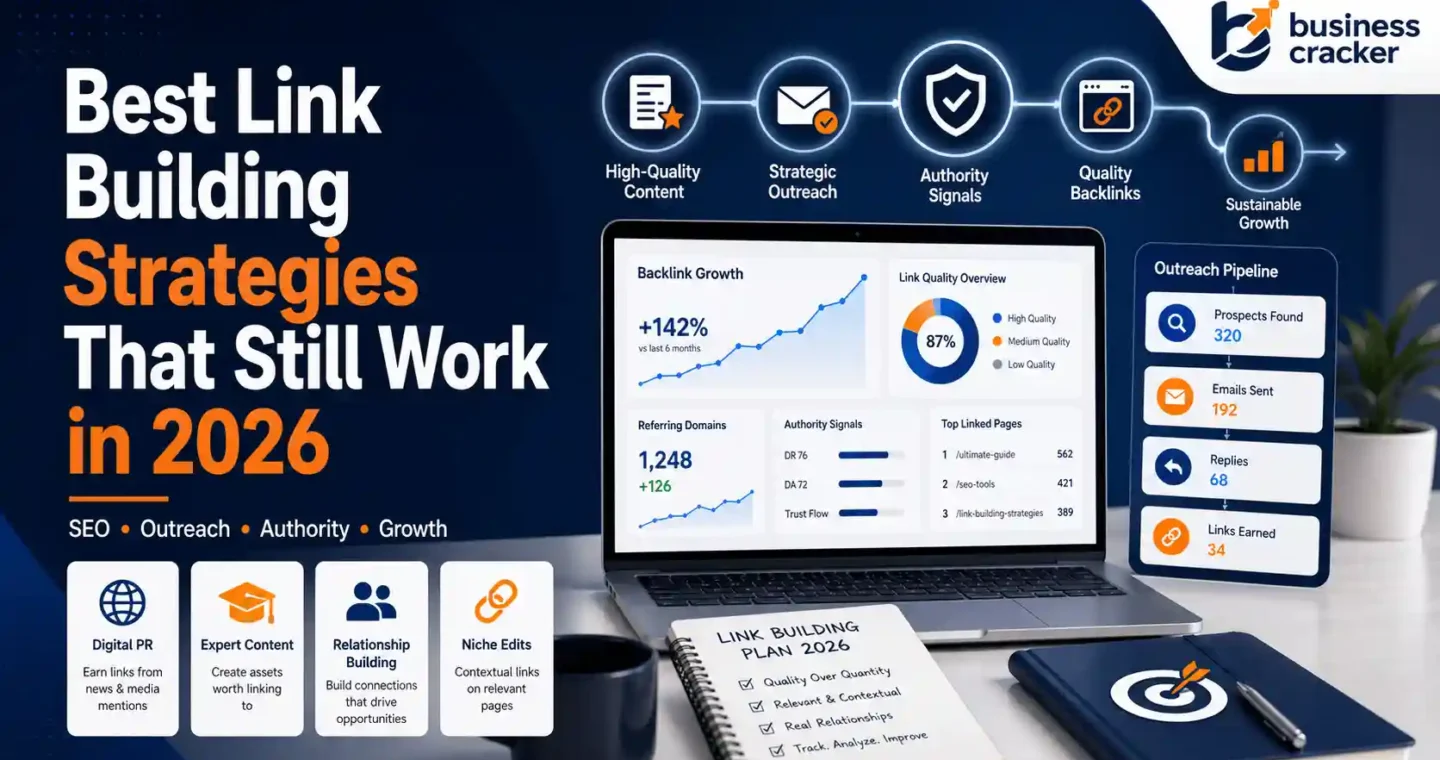
A good link building strategy in 2026 has very little to do with collecting random backlinks.
That version of link building is tired. It also creates risk.
Marketers, SEO executives, and founders are dealing with a harder problem now. They need links that still help after algorithm updates, but they also need to avoid tactics that waste money, trigger risk, or produce reports full of links that never move rankings, referral traffic, or brand trust.
Recent SEO community discussions show the same pattern. People are not asking whether backlinks exist. They are asking which link building strategies are actually working in 2026, whether off-page SEO still matters, and which “free backlink” methods are now a waste of time. In one Reddit link building discussion, the main request was simple: real experiences, not theory. In another Digital Marketing discussion, the user called out mass guest posting, directory submissions, and link exchanges as tactics that feel outdated or risky.
That is the right concern.
The best link building strategies in 2026 are not shortcuts. They are methods that create useful references from relevant websites, support real SEO goals, and hold up under manual review.
The Problem This Article Solves
Marketers need practical link building methods that are still safe, realistic, and useful after search algorithm updates.
The problem is not a lack of tactics. The problem is that most lists still recommend the same old ideas without explaining what has changed.
A modern link building strategy needs to answer these questions:
- Which tactics still work?
- Which tactics are risky now?
- How do you build high quality backlinks without relying on spam?
- When does guest posting make sense?
- When is digital PR worth the effort?
- How do you measure link building beyond link count?
- How do you avoid paying for links that Google may ignore?
Desired Reader Outcome
After reading this guide, you should be able to:
- Choose link building strategies based on your business stage
- Build links without relying on low-quality guest post farms
- Understand where digital PR, guest posting, and content link building fit
- Know how to qualify link opportunities before outreach
- Avoid outdated tactics that waste time
- Connect link building with SEO services and broader digital marketing services
- Build a safer off-page SEO plan for 2026
First, What Makes a link-building strategy work in 2026?
A working link building strategy should pass five tests.
1. Relevance
The linking website should make sense for your niche, topic, audience, location, or business relationship.
A backlink from a relevant industry blog, local publication, partner page, resource page, or media mention is usually more useful than a random high-DA link from an unrelated site.
2. Editorial Value
The link should exist because it helps the reader.
If the link is forced into thin content, placed on a generic guest post site, or added to a page that exists only to sell links, it is weak.
3. Real Visibility
A link from a page with no traffic, no indexation, and no audience is not much of an asset.
You do not need every link to come from a huge publication. But the page and domain should show signs of real search visibility, referral value, or audience trust.
4. Natural Anchor Text
Anchor text should look natural.
A safe link profile uses brand anchors, URL anchors, partial-match anchors, page title anchors, and contextual phrases. Repeating exact-match keywords across many placements is not a smart strategy.
5. Policy Awareness
Google’s spam policies warn against tactics used to manipulate rankings or search systems. Google’s link best practices also state that paid links should be qualified with sponsored or nofollow, while user-generated links should use ugc or nofollow where appropriate.
That does not mean link building is dead. It means link building needs to be more careful, more relevant, and less mechanical.
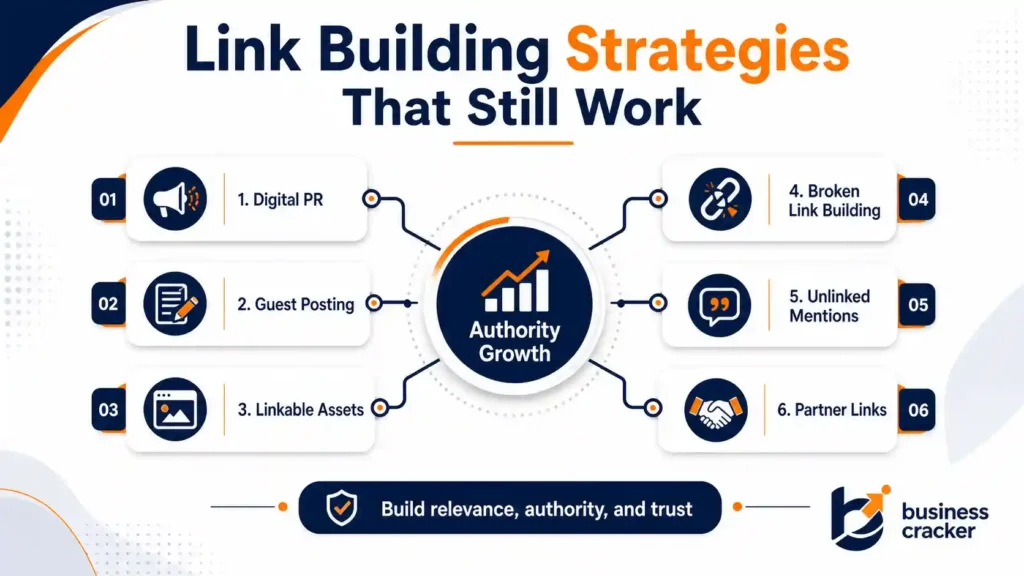
1. Digital PR Based on Real Stories, Data, and Expert Insight
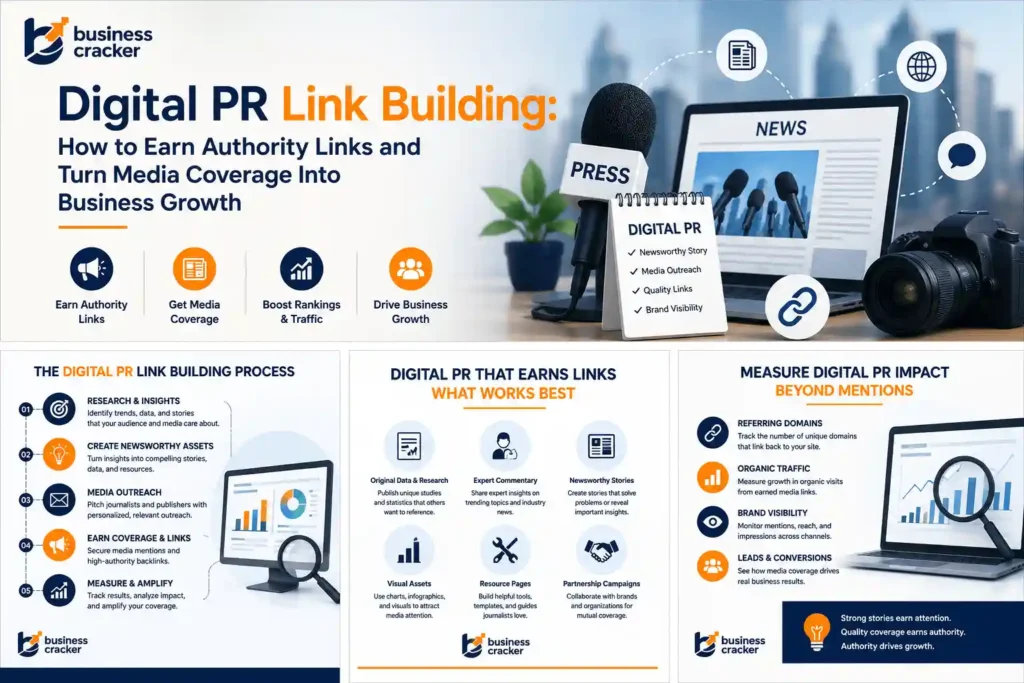
Digital PR is one of the strongest link building strategies in 2026 because it creates links through newsworthy or useful material.
This can include:
- Original data
- Industry surveys
- Expert commentary
- Founder opinions
- Trend analysis
- Local business stories
- Product data
- Research reports
- Case studies
- Tools or calculators
- Strong visual assets
- Public-interest angles
Digital PR works because it gives journalists, bloggers, and industry publishers something worth referencing.
For example, a cybersecurity company could publish data on small business phishing attacks. A real estate company could analyze rental price changes by city. A SaaS company could publish benchmark data from its product usage. A local agency could release a report on small business marketing costs.
These assets are easier to pitch because they are not just asking for a backlink. They give the publisher a useful source.
Recent BuzzStream link building statistics show that digital PR remains a major focus for link builders, especially as teams try to earn links and visibility in a more competitive search environment.
How to Use Digital PR Properly
Start with a story, not a link target.
Ask:
- What data do we have that others do not?
- What opinion can our team defend?
- What industry change can we explain better than others?
- What local or niche trend can we document?
- What would a journalist, editor, or blogger actually want to cite?
Then build a campaign around that.
A digital PR campaign should include:
- Clear angle
- Strong headline
- Credible data
- Simple methodology
- Quote from a relevant expert
- Visual summary
- Short pitch
- Targeted media list
- Follow-up plan
- Reporting on links, mentions, traffic, and brand visibility
Digital PR is not the cheapest tactic, but it can produce stronger authority signals than low-quality paid guest posts.
2. Guest Posting on Relevant Editorial Websites
Guest posting still works, but not the way many people use it.
Weak guest posting looks like this:
- Find a website that accepts anything
- Pay for placement
- Send generic content
- Add exact-match anchor text
- Repeat at scale
That is not a safe link building strategy.
Better guest posting looks like this:
- Choose websites with a real audience overlap
- Pitch a topic that fits the publisher
- Write something useful
- Include your link only where it adds context
- Use natural anchor text
- Avoid sites that openly sell links to every niche
A BuzzStream guest post cost study found that most guest post marketplaces contain a large share of low-quality sites, while truly high-quality placements are rare and expensive. That supports what many SEOs already see in the field: guest posting is not dead, but the low-end market is polluted.
When Guest Posting Makes Sense
Guest posting can still be useful when:
- The website is relevant to your industry
- The publisher has real editorial standards
- The article is useful without the backlink
- The audience could become customers, partners, or subscribers
- The link fits naturally
- The site is not part of a guest post farm
- The site has real organic traffic
- The page is likely to be indexed
For example, if Business Cracker writes a guest article for a marketing publication about off-page SEO mistakes, a contextual link to its link building services page may make sense if the article discusses professional support.
The link should fit the reader’s next step.
3. Content Link Building With Assets People Actually Cite
Content link building means creating content that is worth linking to, then promoting it to the right people.
This is different from publishing blog posts and waiting.
Most standard blog posts do not earn links because they repeat information already available elsewhere.
Better linkable assets include:
- Original research
- Industry statistics pages
- Calculators
- Templates
- Checklists
- Comparison guides
- Free tools
- Glossaries
- Data visualizations
- Maps
- Benchmark reports
- “State of the industry” reports
- Expert roundups with real editorial input
The asset needs a reason to be cited.
For example:
- A digital marketing budget calculator can earn links from startup blogs.
- A local SEO checklist can earn links from business associations.
- A website launch checklist can earn links from web design blogs.
- A report on link building pricing can earn links from SEO writers.
- A guide on choosing an SEO agency can earn links from business education sites.
How to Build Links With Content
Use this process:
- Find a topic writers already cite.
- Check what pages currently earn links.
- Identify what is missing.
- Create a stronger or more specific asset.
- Build a list of writers, bloggers, editors, and resource pages.
- Pitch the asset with a clear reason.
- Track links, mentions, referral traffic, and ranking movement.
Content link building works best when the asset has a clear use case for someone else’s article.
4. Resource Page Outreach
Resource page outreach is simple, but it still works when the resource is genuinely useful.
Many websites maintain lists of helpful tools, guides, vendors, associations, or educational content.
Examples include:
- University resource pages
- Association resource pages
- Local business resources
- Nonprofit resource pages
- Startup tool lists
- Marketing resources
- Industry education pages
- Community guides
The mistake is pitching weak content to every resource page you can find.
A better approach is to pitch only when your page adds clear value.
Good pages for this tactic include:
- Free templates
- Practical guides
- Calculators
- Checklists
- Research reports
- Local business resources
- Educational explainers
- Step-by-step tools
Outreach Example
Weak pitch:
“Please add our website to your resource page.”
Better pitch:
“I noticed your page lists resources for small business owners working on SEO. We published a practical checklist that explains how to evaluate backlinks, anchor text, and outreach quality. It may be useful for your readers who are comparing SEO vendors.”
The second pitch explains why the page deserves inclusion.
5. Broken Link Building With Better Replacement Content
Broken link building means finding dead links on relevant websites and suggesting your content as a replacement.
This strategy still works because it helps the site owner fix a problem.
But it only works when the replacement content is a close match.
The process:
- Find relevant pages with broken external links.
- Check what the dead page used to cover.
- Create or identify a strong replacement page.
- Contact the site owner or editor.
- Explain the broken link and suggest your resource.
- Keep the pitch short and helpful.
Broken link building fails when marketers suggest unrelated pages only because they want a backlink.
If the dead resource was about “local SEO checklist,” do not pitch a generic homepage. Pitch a better local SEO checklist.
6. Unlinked Brand Mention Reclamation
Unlinked brand mentions are one of the cleanest link building opportunities.
This happens when another website mentions your company, founder, product, report, event, or content but does not link to your website.
The publisher already knows you. You are not starting cold.
You can track mentions using tools like Google Alerts, Ahrefs, Semrush, Brand24, or manual search.
Look for mentions of:
- Company name
- Founder name
- Product name
- Report title
- Campaign name
- Event sponsorship
- Podcast appearance
- Interview
- Case study
- Branded statistics
Then ask politely if they can add a link for reader context.
This works best when the link helps readers verify or learn more.
7. Competitor Link Gap Analysis
Competitor link gap analysis is useful, but only if you use it carefully.
The goal is not to copy every competitor’s backlink. Many competitor links are weak, paid, irrelevant, or outdated.
The goal is to find patterns.
Look for:
- Industry blogs linking to multiple competitors
- Association pages
- Supplier pages
- Review websites
- Local citations
- Podcast interviews
- Resource pages
- Guest posts on relevant sites
- Digital PR campaigns
- Listicles
- Product comparisons
- Case study mentions
Then classify each opportunity.
Use this table:
| Link Type | Should You Replicate? | Why |
| Relevant industry directory | Yes, if credible | Good foundational link |
| Local association | Yes | Useful for local trust |
| Random guest post farm | No | Low value and risky |
| Partner page | Maybe | Depends on the relationship |
| Digital PR mention | Learn from it | Build a better story |
| Spam directory | No | Usually not worth it |
| Resource page | Yes, if your asset fits | Strong contextual opportunity |
| Podcast interview | Yes | Good for authority and referral value |
Competitor research should guide your link building strategy, not replace judgment.
8. Partner, Vendor, and Supplier Links
Many businesses ignore links they have already earned through real relationships.
Check whether your business can earn links from:
- Software partners
- Suppliers
- Vendors
- Distributors
- Certification providers
- Associations
- Event partners
- Franchise networks
- Resellers
- Integration partners
- Sponsorship pages
- Client case studies
These links are often safer because the relationship is real.
For example:
- A web design agency may be listed on a technology partner page.
- A SaaS company may be listed on an integration marketplace.
- A local business may be listed on a chamber of commerce page.
- A consultant may be featured in a client success story.
These links may not always be high authority, but they are relevant and defensible.
9. Expert Commentary and Journalist Requests
Expert commentary works when you can provide a clear, useful quote on a topic where you have real experience.
Journalists and industry writers often need sources for articles. If you respond with practical insight, you may earn a brand mention and backlink.
Good expert commentary is:
- Specific
- Short
- Based on experience
- Non-promotional
- Easy to quote
- Relevant to the journalist’s angle
Bad expert commentary sounds like a sales pitch.
Strong topics for expert commentary include:
- Industry trends
- Pricing changes
- Common mistakes
- Buyer behavior
- Local market changes
- Technical explanation
- Risk and compliance
- Founder lessons
- Data interpretation
This strategy works especially well for founders, consultants, agencies, SaaS teams, and niche experts.
10. Podcast and Interview Link Building
Podcasts, interviews, webinars, and expert panels can generate relevant backlinks while also building trust.
Many podcast pages include:
- Guest bio
- Company link
- Episode transcript
- Show notes
- Resource links
- Social links
This strategy works because it is based on expertise and relationship building, not link insertion.
Good targets include:
- Niche podcasts
- Industry webinars
- Local business shows
- YouTube interviews
- Founder interview series
- Expert roundtables
- Community events
The link is a byproduct of participation.
For founders, this is often more useful than buying guest posts because it builds both visibility and authority.
11. Local Link Building
Local link building still works because local relevance matters.
For local businesses, a backlink from a city-specific, industry-specific, or community-specific website can be more useful than a generic national domain.
Local link sources include:
- Local newspapers
- Community blogs
- Business associations
- Local chambers
- Sponsorship pages
- Event pages
- Schools and charities
- Local directories
- Supplier pages
- Local podcast pages
- Tourism websites
- Neighborhood guides
This is especially useful for:
- Clinics
- Contractors
- Law firms
- Real estate businesses
- Restaurants
- Local agencies
- Fitness studios
- Home service businesses
- Education providers
Local links should be judged by relevance, not only metrics.
12. Link Building Through Case Studies
Case studies can attract high-quality backlinks when they include specific outcomes, data, and useful lessons.
A good case study can earn links from:
- Partner websites
- Client websites
- Industry blogs
- SaaS tools used in the project
- Marketing publications
- Sales enablement resources
- Training materials
- Niche newsletters
The key is to make the case study useful beyond your own promotion.
A weak case study says:
“We helped the client grow.”
A strong case study says:
- What problem existed
- What was changed
- What data was measured
- What results came from the work
- What others can learn
- Which tools, processes, or decisions mattered
This gives writers something to reference.
13. Link Building Through Original Statistics
Writers constantly need statistics.
If your website publishes useful, well-sourced, or original statistics, it can attract links naturally over time.
Examples:
- SEO pricing statistics
- Small business marketing budget statistics
- Website conversion benchmarks
- Local SEO trends
- Industry survey findings
- Link building cost data
- Content marketing performance data
- E-commerce SEO benchmarks
This strategy takes effort, but it can create long-term link value.
Make sure your statistics page includes:
- Clear data points
- Source links
- Date updated
- Methodology
- Charts or tables
- Short summaries
- Easy-to-copy insights
- Author or company credibility
If you publish data, make it easy for others to cite.
14. Link Building Through Tools and Templates
Free tools and templates can earn links because they solve a practical problem.
Examples:
- SEO audit checklist
- Backlink quality checklist
- Content brief template
- Website launch checklist
- Marketing budget calculator
- Link building outreach tracker
- Technical SEO checklist
- Local SEO citation tracker
- Blog content calendar
- Landing page review checklist
Tools and templates work because they are useful even without a sales pitch.
For Business Cracker, a practical asset could be a “Backlink Quality Review Checklist” that helps marketers judge whether a link is relevant, indexed, safe, and worth paying for. That kind of asset could support both SEO services and link building services.
15. Content Refresh Outreach
Content refresh outreach is underrated.
Many articles ranking today include outdated statistics, broken references, old screenshots, or weak examples.
If you publish a newer, better resource, you can contact writers who linked to the older resource and suggest your updated version.
This works best when your content is clearly better.
A good refreshed asset may include:
- New 2026 data
- Better examples
- Updated screenshots
- More accurate definitions
- Cleaner structure
- Stronger expert input
- Current policy references
- Better visuals
Do not pitch a weaker page as a replacement. Editors can tell.
What Link Building Strategies No Longer Deserve Much Budget?
Some tactics may still create links, but they rarely create meaningful value.
Be careful with:
- Mass directory submissions
- Blog comment links
- Forum profile links
- Automated link building
- Private blog networks
- Low-quality guest post farms
- Exact-match anchor packages
- Large-scale reciprocal links
- Random niche edits
- Coupon pages with no relevance
- Social profile links created only for SEO
- AI-generated guest posts on weak sites
Google’s qualify outbound links documentation explains link attributes such as sponsored, ugc, and nofollow. This matters because many old link tactics depend on links that are either ignored, low trust, or risky when used at scale.
A simple rule works well:
If the link looks embarrassing in a manual review, do not build it.
How to Choose the Right Link Building Strategy
Not every business needs the same tactic.
Use this table as a starting point.
| Business Situation | Best Strategy |
| New local business | Local citations, chambers, associations, partner links |
| B2B service company | Guest posting, expert commentary, digital PR, case studies |
| SaaS company | Integration links, comparison mentions, data reports, and podcasts |
| Ecommerce brand | Product PR, gift guides, review outreach, category content |
| Startup founder | Interviews, founder stories, expert quotes, startup directories |
| Agency website | Guest posting, original research, templates, linkable guides |
| Website with strong content but weak authority | Content link building, resource outreach, and digital PR |
| Website with poor technical SEO | Fix SEO first before building links |
| Website with no linkable assets | Create tools, guides, or data before outreach |
A strong link building strategy starts with the website’s real problem.
If rankings are stuck because the content is weak, links will not fix everything. If the website has strong content but low authority, link building can help.
How to Qualify a Link Opportunity
Before chasing any backlink, check these points.
Relevance
Would this website naturally mention your business, content, product, or expertise?
Traffic
Does the site get relevant organic traffic?
Page Quality
Is the page useful, indexed, and written for humans?
Outbound Links
Does the site link to random industries, gambling, CBD, coupons, crypto, or unrelated commercial pages?
Editorial Standards
Does the site have real authors, categories, audience, and publishing quality?
Anchor Text
Will the link use natural anchor text?
Placement
Will the link appear in the main content, not hidden in a footer or spam block?
Link Attribute
If the placement is paid or sponsored, will it follow Google’s link attribute guidance?
Referral Potential
Could a real user click this link and care?
Long-Term Value
Will this link still look useful one year from now?
If the answer is no across several of these, skip it.
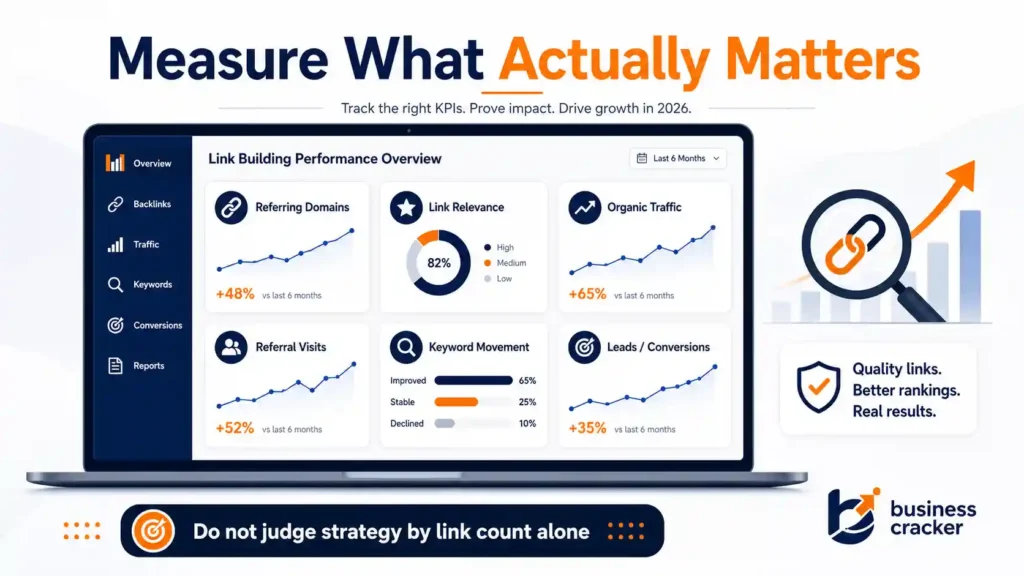
How to Measure Link Building in 2026
Do not measure only the number of links built.
Track:
- Referring domains
- Link relevance
- Link quality
- Link type
- Follow, nofollow, sponsored, or UGC status
- Target URL
- Anchor text
- Placement date
- Indexation
- Link retention
- Referral traffic
- Ranking movement
- Organic traffic to target pages
- Keyword visibility
- Branded search growth
- Assisted conversions
- Lead quality
- Competitor link growth
Google’s SEO Starter Guide makes it clear that SEO is about helping search engines understand content and helping users find the site through search. Link building should support that goal, not operate as a separate spreadsheet activity.
A Practical 90-Day Link Building Plan
Here is a realistic plan for SEO executives, marketers, and founders.
Days 1 to 15: Audit and Strategy
- Review the current backlink profile
- Identify risky links
- Check anchor text distribution
- Review competitor backlinks
- Choose target pages
- Check technical SEO basics
- Review internal linking
- Decide monthly link goals
- Define quality standards
Days 16 to 30: Build Assets
- Create or improve linkable content
- Prepare guest post topics
- Build a media angle
- Create expert quote templates
- Build outreach lists
- Segment prospects by tactic
- Prepare the reporting sheet
Days 31 to 60: Outreach
- Pitch digital PR angles
- Contact resource pages
- Pitch guest posts
- Find broken link opportunities
- Claim unlinked mentions
- Ask partners for links
- Book podcast or interview opportunities
Days 61 to 90: Review and Improve
- Check live links
- Review link quality
- Track rankings
- Track referral traffic
- Review outreach response rate
- Replace weak tactics
- Improve content assets
- Build the next campaign
The goal is not to build as many links as possible. The goal is to build a repeatable system.
How Link Building Fits With SEO and Digital Marketing
Link building should not sit outside SEO.
It should connect with:
- Technical SEO
- Keyword research
- Content planning
- Internal linking
- Digital PR
- Brand positioning
- Website conversion
- Local SEO
- Analytics
- Reporting
If your website has poor content, weak landing pages, or technical issues, fix those before scaling link acquisition. Business Cracker’s SEO services help connect technical SEO, content, on-page improvements, and authority building.
If your business needs a broader growth plan, Business Cracker’s digital marketing services can connect SEO, link building, content, web design, social visibility, and paid campaigns into one strategy.
For businesses specifically focused on off-page authority, Business Cracker’s link building services can help build safer, more relevant backlinks through structured outreach and quality control.
Final Checklist: Link Building Strategy for 2026
Before you invest time or budget, ask:
- Is this link relevant?
- Does this site have real audience value?
- Would the link make sense without SEO?
- Is the content useful?
- Is the anchor text natural?
- Is the placement editorially appropriate?
- Is the page likely to be indexed?
- Are paid links handled correctly?
- Can this link send referral traffic?
- Does this support a priority page?
- Can we measure the result?
- Would we be comfortable showing this link to a client, investor, or Google reviewer?
If the answer is no, do not build the link.
Final Thoughts
The best link building strategies that still work in 2026 are not the fastest tactics. They are the most defensible ones.
Digital PR, relevant guest posting, content link building, resource outreach, broken link building, expert commentary, local links, partner links, and original research can still work when they are planned properly.
The common thread is simple: useful references from relevant websites.
High-quality backlinks come from relevance, trust, editorial value, and real audience fit, not from bulk lists, fake authority, or exact-match anchor packages.
If your business needs a safer and more practical link building strategy, contact Business Cracker to discuss how SEO, content, and authority building can support your growth in 2026.